

Pride in Place: Why It Matters—and How CPTED Helps Communities Get There
By Joelle Hushen – President and CEO
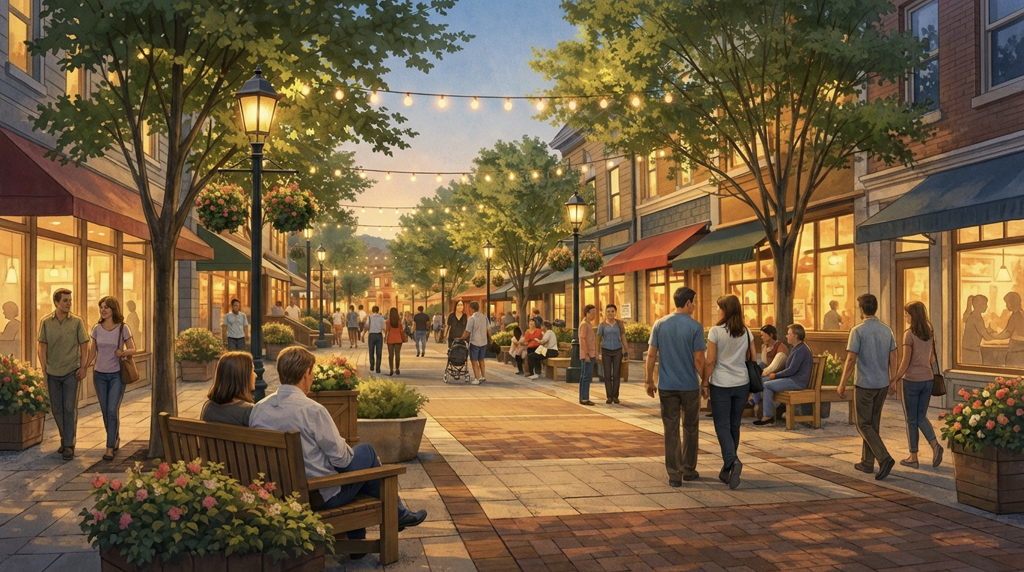
“Pride in place” has become a common phrase in planning, public policy, and community development—but at its core, it describes something deeply human. People care for places when they feel connected to them. They protect what they feel belongs to them. And they show up—socially, civically, and economically—when they believe their presence matters.
From a Crime Prevention Through Environmental Design (CPTED) perspective, pride in place is not a soft or abstract outcome. It is a protective factor. Communities with strong pride consistently experience higher levels of positive activity, informal guardianship, social cohesion, and long-term stewardship—conditions that directly support safer, healthier environments.
Pride in place does not happen by accident. It is cultivated through intentional design, inclusive processes, and ongoing care—where people are not just users of space, but active participants in shaping and sustaining it.
Pride in Place and CPTED: A Natural Alignment
CPTED is often misunderstood as being primarily about deterring crime through physical features. In reality, CPTED has always been about shaping environments that support positive human behavior.
The core CPTED principles—natural surveillance, natural access control, territorial reinforcement, and maintenance—work best when people feel a sense of ownership, responsibility, and belonging. Pride in place strengthens every one of these principles.
When people are proud of where they live, work, and gather:
• They are more likely to notice when something is out of place
• They are more willing to intervene, report concerns, or offer help
• They invest time and energy into upkeep and improvement
• They welcome others while still reinforcing shared norms
In short, pride in place fuels the social infrastructure that CPTED relies on.
From a CPTED lens, pride in place becomes visible through everyday actions and shared responsibility.
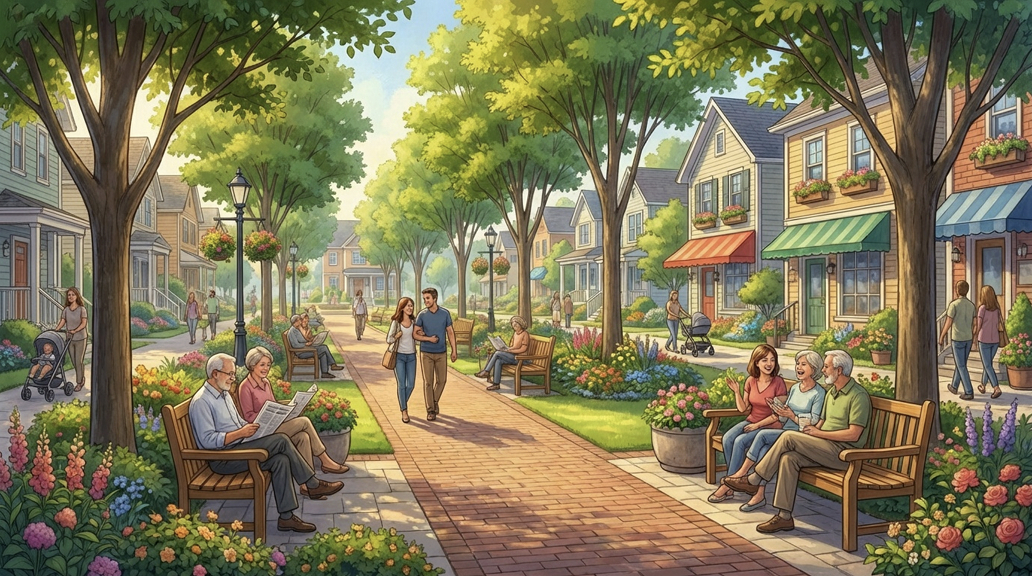
Pride in place is reflected in how people comfortably use and share everyday spaces.
Ten Ways Communities Can Build Pride in Place Through CPTED
Drawing from CPTED practice, community engagement, and placemaking research, the following strategies support pride in place while reinforcing safety and well-being.
1. Work Across Issues, Not in Silos
Safety, transportation, housing, health, economic development, and public space design are deeply interconnected. Communities that approach pride in place holistically—rather than through isolated projects—create environments that feel intentional and coherent. CPTED encourages this systems-based thinking.
2. Build Real Partnerships
Pride grows when residents, businesses, nonprofits, and local agencies work together as equals. These partnerships function as engines for short-term action and long-term stewardship, ensuring that improvements are not only installed but sustained.
3. Involve, Empower, and Co-Create
People are more invested in places they help shape. Engagement should go beyond surveys and public meetings to include co-creation, shared decision-making, and visible follow-through. This directly supports territorial reinforcement by reinforcing “this is our place.”
4. Improve the Journey, Not Just the Destination
The experience of entering and moving through a space matters. Clear wayfinding, intuitive access, pedestrian-scale design, and welcoming transitions all reduce anxiety and increase comfort—key components of both CPTED and pride in place.
5. Design Public Spaces for Real People
Successful public spaces are accessible, comfortable, and inclusive. CPTED emphasizes visibility, activity, and social interaction, while pride in place grows when people see spaces being used and enjoyed by a wide range of community members.
6. Support a Diverse and Healthy Activity Mix
Vacancy and monotony erode pride. A balanced mix of uses—daytime and evening, commercial and civic, formal and informal—creates vitality and natural surveillance while supporting local identity.
7. Encourage Community-Anchored Enterprises
Locally rooted businesses and community-owned initiatives often serve as informal guardians and social hubs. They strengthen connections between people and place while reinforcing long-term investment.
8. Honor Heritage and Culture
Cultural expression, history, and local stories give places meaning. CPTED does not advocate for sterile environments—it supports spaces that reflect identity, foster belonging, and differentiate one place from another.
9. Shape the Narrative From the Inside Out
How a community talks about itself matters. Pride in place grows when messaging reflects lived experience, progress, and shared values—not just marketing slogans. CPTED supports narratives that emphasize care, responsibility, and mutual respect.
10. Maintain, Monitor, and Celebrate Success
Maintenance is both a CPTED principle and a pride builder. Clean, cared-for spaces communicate expectations and respect. Tracking progress and celebrating wins reinforces trust and motivates continued engagement.
Pride in Place Is a Process, Not a Project
Pride in place is sustained through ordinary moments of presence, care, and connection.
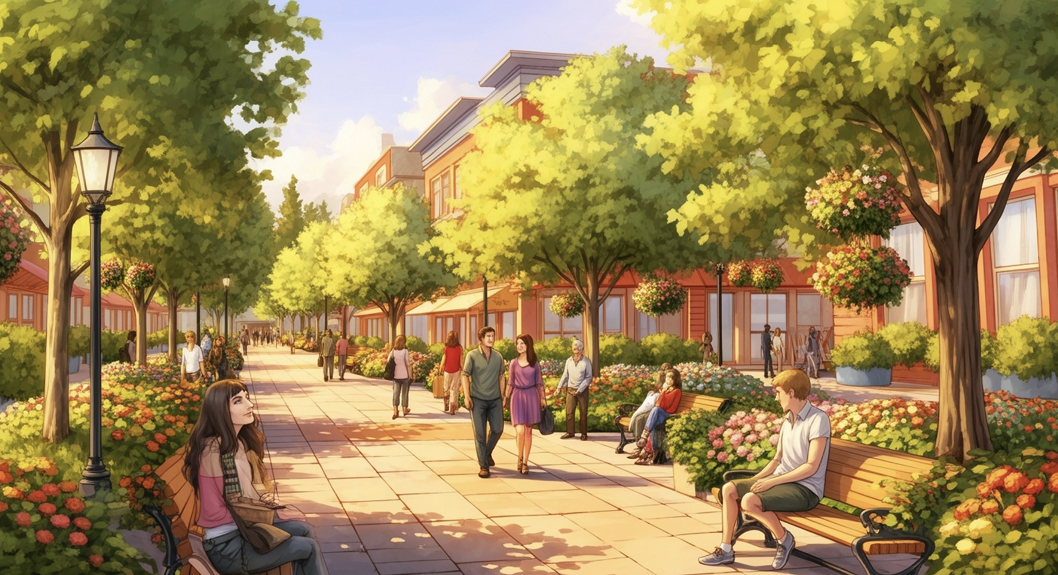
Wayfinding, transit, and everyday movement help public spaces remain legible and usable over time.
Communities do not need to do everything at once. Trust is built through small, visible wins that demonstrate collaboration and follow-through. Over time, these efforts compound—creating safer environments, stronger relationships, and places people are proud to call their own.
From a CPTED perspective, pride in place is not separate from safety. It is foundational to it.
When people feel connected to their environment—and to each other—crime prevention becomes a shared responsibility, not just a design strategy.

Joelle Hushen – President and CEO
Joelle Hushen, as the Executive Director of the NICP, Inc., is responsible for course curriculum, standards, and evaluation. This includes the development and maintenance of the NICP’s CPTED Professional Designation (CPD) program, which has become the recognized standard for CPTED professionals. As part of the CPD program Joelle designed the CPTED Review, Exam, & Assessment Course and is the lead instructor.
Joelle has a background in education and research with a Bachelor of Science degree from the University of South Florida. She has completed the Basic, Advanced, and Specialized CPTED topics, and holds the NICP, Inc.’s CPTED Professional Designation. Joelle is a member of the University of South Florida Chapter of the National Academy of Inventors, and the Florida Design Out Crime Association (FLDOCA).
Ready to Earn Your CPTED Certification?
Take the next step toward becoming a CPTED professional. Our in-person and online training options will prepare you to assess environments, apply proven CPTED strategies, and earn your CPD designation. Learn how to design safer, more livable spaces that strengthen communities and reduce crime before it happens.