

The CPTED Movement Is…
By Joelle Hushen – President and CEO

Contemporary mixed-use environments designed with visibility, activity, and pedestrian scale in mind.
A Framework for the Future of Safety
At the National Institute of Crime Prevention, we have spent years working alongside law enforcement professionals, planners, architects, educators, property managers, and community leaders. Through training programs, conferences, fieldwork, and collaboration, we have had a front-row seat to the evolving conversation about safety and community.
One thing has become increasingly clear.
Communities are not just asking how to prevent crime. They are asking how to build environments where people feel confident, connected, and invested. Schools want students to feel both secure and supported. Cities are rethinking public spaces so they function throughout the day and into the evening. Business districts are looking for ways to encourage activity while maintaining comfort and clarity.
The conversation is expanding.
Safety is no longer treated as a stand-alone concern. It is becoming a shared expectation integrated into discussions about public health, economic vitality, design, sustainability, and belonging.
“Safety is no longer treated as a stand-alone concern.
It is becoming a shared expectation.”
At NICP, we believe this moment requires clarity. Not more fragmented terminology. Not competing versions of what safety should mean. What is needed is a shared framework, something grounded, practical, and adaptable across industries.
That is why we are defining what we call The CPTED Movement.
CPTED, Crime Prevention Through Environmental Design, has long provided a foundation for strengthening environments through thoughtful design and management. Its core principles remain straightforward and powerful: design that allows people to see and be seen, clear transitions between public and private space, intentional access points, and places that are maintained and cared for over time.
When applied well, these principles do more than reduce risk.
They support connection.
They reinforce ownership.
They create environments where positive activity can thrive.
This perspective aligns with what we call Embodied CPTED, the understanding that people experience environments physically and emotionally before they analyze them intellectually.
“People experience environments physically and emotionally before they analyze them intellectually.”
Those shared human responses are what shape how we experience community in the first place.
“Community is any space where humans connect.”
Seeing CPTED through this lens broadens its relevance. Community is not limited to geography. It exists in schools, workplaces, apartment buildings, parks, campuses, houses of worship, downtown corridors, and neighborhood streets. Wherever people gather, design influences whether they feel welcome, aware, and engaged.
The foundation of CPTED has not changed.
What has changed is the scale of its importance.
For this movement to move forward, the framework must remain clear, consistent, and accessible not just to specialists, but to everyone who influences how a place functions.
That begins with empowering the professionals who apply it.
The CPTED Movement Is… Empowering Practitioners
A movement cannot grow without strong practitioners.
Across industries, professionals are being asked to think more intentionally about how design shapes behavior, comfort, and shared responsibility. Planners are integrating safety into long-range visions. Architects are balancing aesthetics with visibility and flow. Law enforcement agencies are collaborating with community partners. Property managers are evaluating lighting, access, and maintenance with greater awareness of their broader impact.
These professionals need more than general guidance. They need structure, standards, and practical tools that translate principles into action.
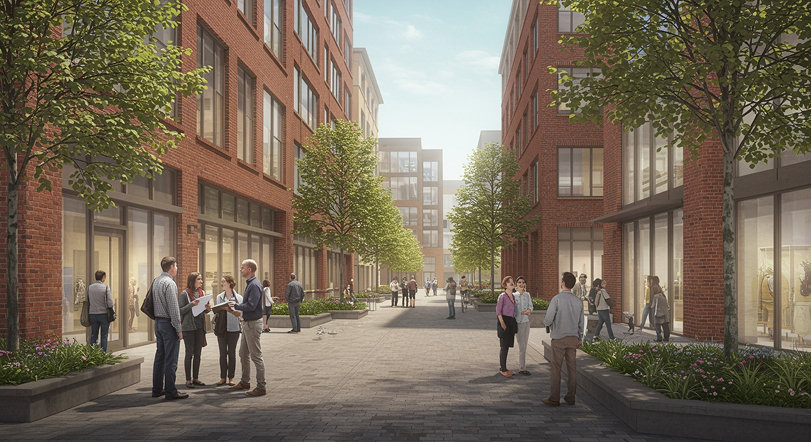
Field-based observation and applied analysis are essential to effective CPTED practice.
At NICP, empowering practitioners means:
• Providing education grounded in the core principles of CPTED
• Establishing professional standards and certifications that reinforce consistency and credibility
• Offering applied training that moves beyond theory and into real-world observation and analysis
• Building partnerships that support measurable, sustainable outcomes
It also means reinforcing that CPTED is not a checklist. It is a disciplined way of thinking, one that strengthens both safety and community health when applied thoughtfully.
“CPTED is not a checklist. It is a disciplined way of thinking.”
When practitioners share a common framework, collaboration improves. Conversations become clearer. Projects move forward with greater confidence.
But professionals alone cannot carry a movement.
For the CPTED Movement to truly take hold, the broader community must understand its role.
The CPTED Movement Is… Educating Communities
If community is any space where humans connect, then everyone who shapes those spaces has a role to play.
CPTED cannot live only in professional reports, design drawings, or policy documents. For the movement to succeed, its principles must be understandable and usable beyond formal training environments.
When residents understand why lighting matters, they advocate for better solutions.
When school communities understand visibility and ownership, they participate in strengthening their campuses.
When business owners recognize how layout and maintenance influence behavior, they make informed decisions that support both safety and vibrancy.
Education turns abstract principles into shared responsibility.
At NICP, educating communities means making CPTED accessible without oversimplifying it. It means developing guides, booklets, articles, and workshops that translate professional language into everyday understanding, and creating resources for schools, neighborhood groups, faith communities, property owners, and civic leaders, not just specialists.
This is not about turning everyone into a practitioner.
It is about helping people see how design, management, and engagement influence the places they care about.
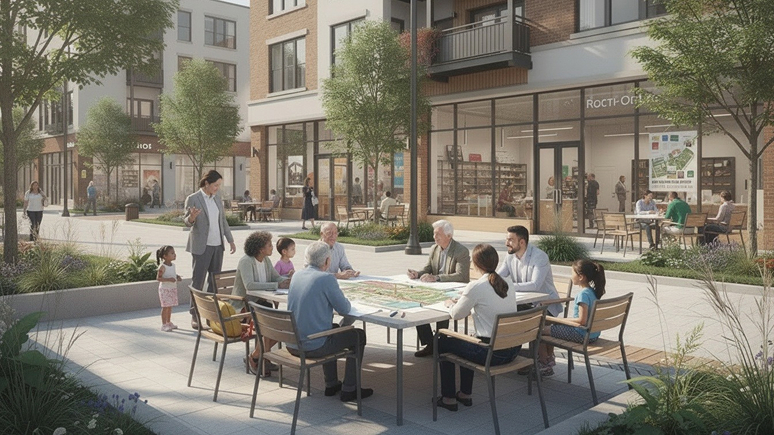
When communities understand design, safety becomes a shared responsibility.
When communities understand the why behind design decisions, trust increases. Conversations become more constructive. Collaboration replaces confusion. Safety becomes less reactive and more proactive.
And perhaps most importantly, belonging strengthens.
When people feel ownership over their environment, when they understand how it functions and how they contribute to it, positive activity grows. That sense of pride in place is not separate from safety. It is one of its strongest reinforcements.
The CPTED Movement recognizes that informed communities are resilient communities.
The CPTED Movement Is… Building a CPTED Hub in Tampa
Ideas gain strength when people gather around them.
While CPTED can be applied anywhere, movements grow when learning, collaboration, and application consistently intersect in a physical setting. Professionals benefit from seeing principles in action. Communities benefit from shared language. Partnerships deepen when people have opportunities to observe, question, and refine ideas together.
“Movements grow when learning, collaboration, and application intersect.”
For this reason, we are intentionally building a CPTED Hub in Tampa, Florida.
Tampa has become a place where education, field-based learning, and professional collaboration come together in a practical way. Through immersive workshops, in-person trainings, conferences, and ongoing partnerships, we are creating a consistent center for applied CPTED study. This includes collaboration with the U.S. CPTED Association and other professional partners who share a commitment to strengthening education and reinforcing clear standards across the field.
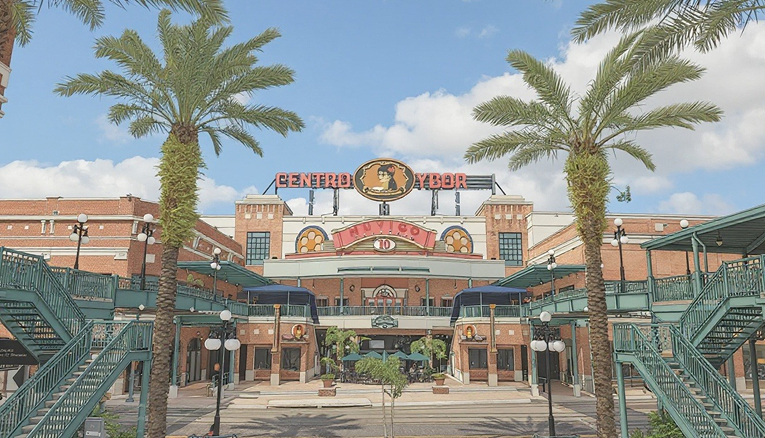
Centro Ybor, Tampa, Florida — an example of layered visibility, defined access points, and pedestrian-scale design within the emerging CPTED Hub.
This hub is not about exclusivity. It is about clarity and momentum.
When participants walk real sites together, evaluate lighting in real time, discuss transitions between public and private space, and examine maintenance strategies on the ground, the principles of CPTED become tangible. They are no longer abstract concepts. They are visible, measurable, and adaptable.
Over time, this kind of engagement builds more than professional skill. It builds alignment. It strengthens networks across industries. It reinforces the understanding that safety and community health are shared responsibilities.
The CPTED Movement is not confined to one city. But by establishing a clear center of learning and collaboration in Tampa, we are helping ensure that the movement grows with structure, consistency, and purpose.
The CPTED Movement Is… Ongoing
This is not a campaign built around a single event or publication.
It is a long-term commitment to strengthening how we think about safety, design, and community.
We believe the future of the built environment will demand greater integration, not separation, between safety, sustainability, public health, economic vitality, and belonging. CPTED provides a framework that connects these conversations without losing focus or clarity.
When practitioners are empowered, when communities are informed, and when spaces exist for collaboration and applied learning, the result is more than reduced risk.
“The result is environments where people feel confident, connected, and proud.”
The CPTED Movement is grounded in principles that have stood the test of time. What is evolving is the scale of their relevance.
Community is any space where humans connect.
Wherever that connection happens, in a classroom, on a sidewalk, in a public square, in a place of worship, in a business district, design influences the experience.
We believe that influence can be intentional.
And we believe this is the moment to move forward with clarity, consistency, and shared purpose.
That is the work guiding us in 2026 and beyond.
For those who want to explore these ideas further, both The CPTED Movement Booklet and the Introduction to CPTED Booklet are available as free resources. Together, they provide a practical starting point for understanding the framework and applying it within your profession, organization, or community. You can also explore the full CPTED Movement Series to view all available booklets and additional resources as the series continues to grow.

Joelle Hushen – President and CEO
Joelle Hushen is the Founder and President of the National Institute of Crime Prevention (NICP), Inc., an internationally recognized leader in Crime Prevention Through Environmental Design (CPTED) training and certification. Under her leadership, NICP has trained thousands of practitioners across law enforcement, planning, design, security, corporate, healthcare, and community development sectors, advancing CPTED as a practical, principle-based approach to creating safer environments. She has guided the development of NICP’s curriculum, assessment standards, and the CPTED Professional Designation (CPD), one of the most widely recognized CPTED credentials in the United States and internationally.
Joelle is also the Co-Founder and Director of the U.S. CPTED Association (USCA), where she supports national collaboration, professional development, and industry advancement. Her work focuses on the relationship between environment, behavior, and human experience, including the development of frameworks such as Embodied CPTED™ and Design for Decommission™. She is committed to expanding CPTED education and supporting professionals working to create safer, stronger communities.
Ready to Earn Your CPTED Certification?
Take the next step toward becoming a CPTED professional. Our in-person and online training options will prepare you to assess environments, apply proven CPTED strategies, and earn your CPD designation. Learn how to design safer, more livable spaces that strengthen communities and reduce crime before it happens.