
On Wednesday, August 27, 2025, Kansas City marked an important step in public safety with the CPTED Professional Certification Graduation Ceremony at the Loews Hotel. The event celebrated law enforcement officers from the Kansas City Police Department (KCPD) and the Kansas City, Kansas Police Department (KCKPD) who successfully completed both the Basic and Advanced Crime Prevention Through Environmental Design (CPTED) courses through the National Institute of Crime Prevention and earning their CPD.
The room was filled with pride as officers received their certifications, recognizing their hard work and study. More than just a ceremony, this moment was a reflection of Kansas City’s dedication to building safer neighborhoods through prevention and design.
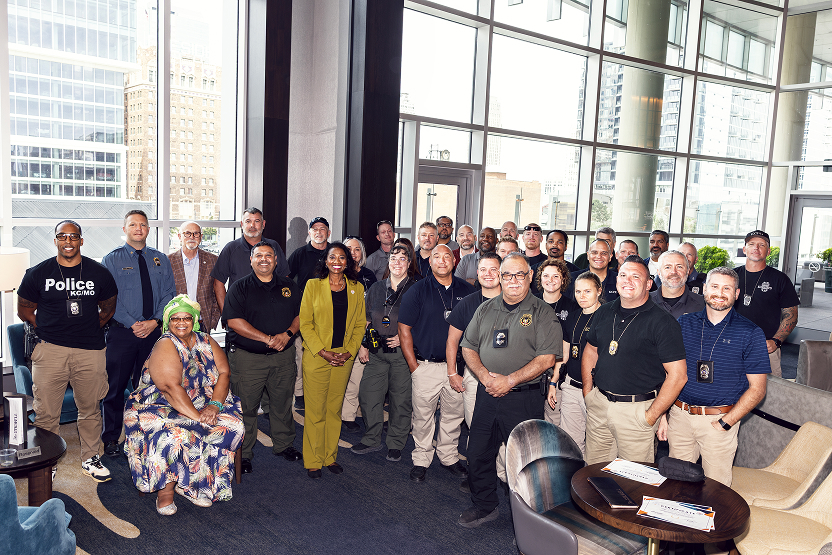
The event highlighted the leadership of Mayor Pro Tem Ryana Parks-Shaw and her team, who have been instrumental in guiding Kansas City’s broader crime reduction strategy. Earlier this year, Parks-Shaw helped launch Kansas City United for Public Safety (KCUPS), a partnership between city leaders, the prosecutor’s office, and law enforcement. KCUPS outlined three phases for addressing crime: intervention, prevention, and tackling root causes.
That vision came to life at the graduation. The mayor’s office and city leaders stood alongside police officers and community partners, showing that real progress happens when leadership and frontline workers are aligned.
A Citywide Effort
The ceremony also underscored the city’s investment in programs that go beyond enforcement. Kansas City has been expanding Community Violence Intervention (CVI) teams, increasing mentorship opportunities for young people, and encouraging business owners to use CPTED principles to reduce risks.
Business leaders, prosecutors, and law enforcement are no longer working in silos. By combining resources and listening to community concerns, Kansas City is creating safer public spaces while strengthening trust between residents and institutions.

Why This Graduation Matters
Each certified officer now brings a specialized skill set that will directly benefit neighborhoods across the city. CPTED teaches professionals how to prevent crime by improving environmental design, from better lighting and landscaping to thoughtful urban planning. These strategies are cost effective, practical, and proven to reduce criminal opportunities.
For Kansas City, the graduation was a public signal that the city is serious about prevention and innovation. It also sent a message to other cities that you do not have to wait for problems to escalate. With collaboration, training, and leadership support, you can make proactive changes that improve safety and quality of life.
A Model for Other Cities
Kansas City has set ambitious goals, including cutting gun violence in half over the next five years. While those goals will require sustained effort, the CPTED graduation shows that the city is already moving in the right direction.
By celebrating officers who invested in advanced training, and by having the visible support of city leadership, Kansas City created a model worth following. Other municipalities can look to this example, blending law enforcement expertise, community partnerships, and political leadership. This can be used as a blueprint for meaningful change.
Looking Ahead
The August 27 ceremony was not just a recognition of achievement. It was a reminder of what can be accomplished when a city unites around public safety. With every graduate now equipped to apply CPTED strategies in the field, Kansas City has strengthened its ability to prevent crime before it happens.
The applause that filled the Loews Hotel was more than celebration. It was a signal of momentum, showing that Kansas City is serious about building safer, stronger communities, and we invite other cities to do the same.
Earn Your CPTED Professional Designation
Earn your Certified CPTED Professional (CPD) designation through flexible online training or immersive in-person events. Learn how to apply CPTED strategies like these to parking lots, parks, buildings, and more—gain the practical skills needed to build safer communities and advance your career in crime prevention.