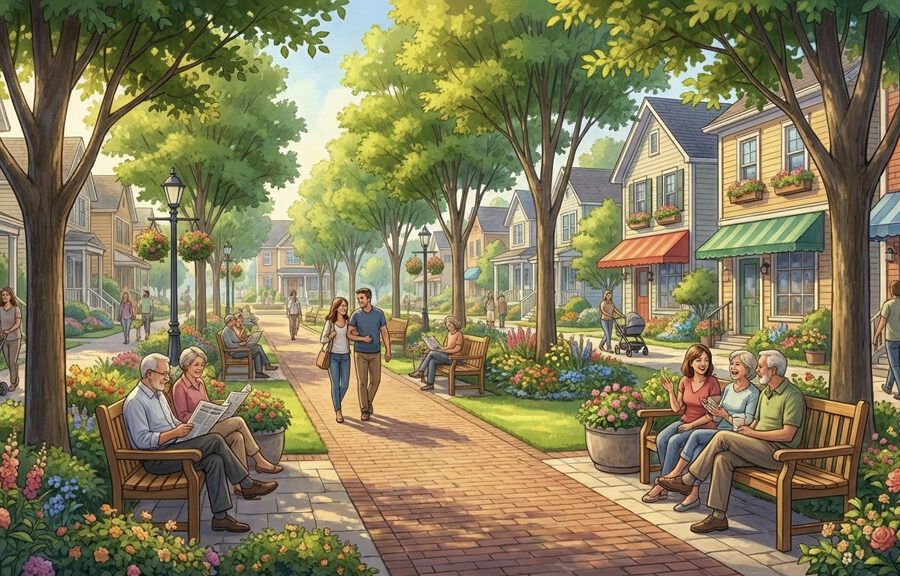
Learn why pride in place is a protective factor and how CPTED helps communities build ownership, stewardship, and shared responsibility for safer environments.
Explore how CPTED is reshaping the way communities experience safety by shifting fear into ownership through design, behavior, and shared responsibility.
Winter markets support CPTED by activating public space during colder months. Learn how seasonal programming strengthens natural surveillance, community connection, and safety year-round.
Tree and shade equity plays a critical role in CPTED by improving comfort, walkability, and natural surveillance. Learn how everyday green infrastructure supports safer, more connected communities.
Violent crime doesn’t just affect individuals. It ripples through entire communities, shaping how people feel in their homes, schools, and public spaces. Nonprofit organizations, often embedded deeply in the neighborhoods they serve, are uniquely positioned to lead positive change. And while their approaches traditionally focus on programming and services, there’s another tool they can use to support safer communities: Crime…
Across the country, communities are starting to push back against large data center developments—not because they are anti-technology, but because they are beginning to understand the long-term impacts these facilities can have when planning stops at approval.
Safety is shifting from an amenity to an expectation. This article explores how CPTED connects design, human behavior, and community in the built environment.
Why CPTED Works in Libraries By Tad Twidwell – CPD Instructor As someone who spent a years in both public safety and in public libraries (and now combines the two experiences to manage security for a library), I approach library security with a practical, balanced lens: protect people, information, and assets while preserving the welcoming, accessible character that defines public…