

CPTED and the Broken Window Theory
By Kipp Lowry, COO, CPD
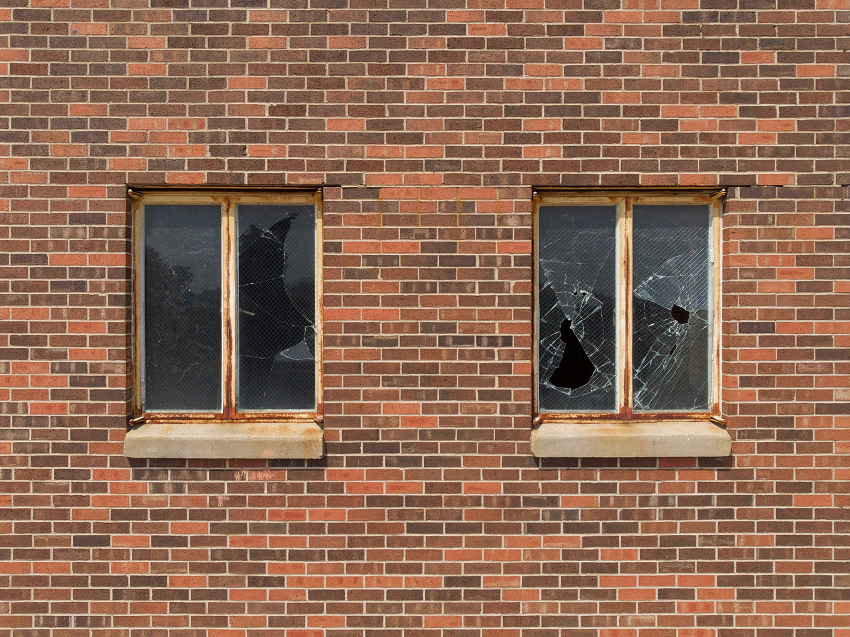
How much does a small problem really matter?
A broken window does not seem like a major issue. It is easy to overlook, especially in a busy environment. But let it sit for a few days or weeks and something starts to change. People notice it, and more importantly, they begin to read into what it means. That is really where the Broken Window Theory comes from. Visible signs of disorder send a message that no one is paying attention. Once that message is out there, behavior starts to shift. Small issues get ignored, and over time, larger ones begin to follow. CPTED looks at this same situation from a slightly different angle. Instead of focusing on the theory alone, it looks at how the environment itself influences behavior and how physical conditions create or remove opportunity. That is where the connection starts to show.
Where CPTED and the Broken Window Theory overlap
CPTED does not rely on the Broken Window Theory, but the two clearly intersect. Both come back to the same idea that the environment is always communicating something, and people pick up on those signals whether they realize it or not. In CPTED, this shows up most clearly through maintenance, but it is just as connected to natural surveillance, natural access control, and territorial reinforcement. A space that is visible, structured, and clearly cared for tends to discourage problems, while a space that feels neglected or unclear tends to do the opposite. The important thing to understand is that this shift does not happen all at once. It builds slowly, and one small issue leads to another until the entire space feels different.
What does this look like in a business setting?
You can see this play out in a retail environment pretty quickly. A shopping center starts to slip a little. A light in the parking lot goes out and stays out, trash builds up near the entrance, and a sign gets damaged and never gets replaced. None of these issues shut the place down and customers still come and go, but the environment is no longer the same. Certain areas of the parking lot feel darker and less predictable, and people begin adjusting where they park, which creates pockets of lower activity and less visibility. At the same time, the lack of maintenance sends a message that the property is not being closely managed, and that matters more than most people think because it lowers the perceived risk for someone looking to break into a car or take advantage of the space. From a CPTED standpoint, the response is straightforward. Restoring lighting improves natural surveillance, clearly defined walkways and entrances reinforce natural access control, maintaining signage and landscaping strengthens territorial reinforcement, and ongoing upkeep ties everything together through maintenance. There is a reason improved lighting alone has been linked to reductions in nighttime crime in the range of twenty to thirty percent, and when that is combined with consistent maintenance, the impact becomes even more noticeable.
How does this apply to residential environments?
The same pattern shows up even more clearly at the residential level. A home with overgrown shrubs covering the windows, inconsistent lighting, and an unsecured side gate might not stand out at first, but those details matter because they create concealment, unclear access, and reduced visibility. From a CPTED standpoint, that is a breakdown in natural surveillance and natural access control. When signs of neglect are added, such as peeling paint or clutter in the yard, the message becomes even stronger and it starts to look like no one is paying attention. Offenders do not need certainty. They are looking for opportunity and reduced risk, and when those conditions are present, the property becomes more attractive as a target. The solution is usually simple. Trim the landscaping so windows are visible again, secure access points, improve lighting, and maintain the property so it reflects occupancy and care. These are not major upgrades, but they change how the space is interpreted, and that alone can influence behavior.
What happens when this expands to the neighborhood level?
At the neighborhood level, these small conditions become much more influential. One neglected property may not have a major impact on its own, but when multiple issues begin to appear, the entire environment starts to shift. A vacant lot sits untouched, lighting becomes inconsistent, and graffiti appears and is not removed. None of these issues are major by themselves, but together they change how the neighborhood feels. As that perception changes, behavior follows. People spend less time outside, fewer residents are visible, and natural surveillance begins to decline. Spaces that once felt active begin to feel uncertain, and this is where the connection between CPTED and the Broken Window Theory becomes very clear. Maintenance becomes the driving factor. When spaces are cleaned, repaired, and actively used, they communicate ownership, and when they are ignored, they communicate the opposite. In some cases, improvements in lighting and maintenance have led to reductions in crime exceeding thirty percent in targeted areas, and the key factor was not enforcement but the way the environment was changed and how people responded to it.
Why small conditions lead to larger problems
The connection between CPTED and the Broken Window Theory is not about choosing one approach over the other. It is about understanding how behavior responds to environment. A broken light, an unmaintained property, or an undefined space does not directly cause crime, but it reduces perceived risk and increases opportunity, and that combination is what drives behavior. CPTED focuses on identifying and correcting those conditions early rather than waiting for them to build into something larger. It looks at how the space functions and how it is perceived, then makes adjustments that reduce opportunity and increase awareness. That is why maintenance is not a secondary consideration. It is one of the four core CPTED principles for a reason, because it reinforces everything else and helps sustain the effectiveness of the environment over time.
How the four CPTED principles support this approach
Natural surveillance ensures that people can see what is happening and feel visible themselves, natural access control guides movement in a way that reduces confusion and limits unintended access, territorial reinforcement creates a sense of ownership that encourages people to pay attention to their surroundings, and maintenance supports all of it by reinforcing the message that the space is cared for and actively managed. When these principles work together, the environment becomes easier to understand and more predictable, and it feels active, visible, and less attractive for unwanted behavior.
Why this approach works in real environments
Across different settings, the pattern stays consistent. Offenders respond to risk and opportunity, and when a space increases the likelihood of being seen and reduces easy access, it becomes less appealing. When that same space also communicates ownership and care, the effect becomes even stronger. CPTED uses design to influence those decisions in a practical way. The Broken Window Theory helps explain why small conditions matter, but CPTED provides a way to address them before they turn into larger problems.
What should you take from this?
Small issues are not just small issues. They are early signals of how a space is functioning. They show whether a place is being observed and maintained. When they are ignored, they tend to build over time. When they are addressed early, they prevent larger problems from developing. This applies to businesses, homes, and entire neighborhoods. The environment is always communicating something, and CPTED is about making sure that message supports safety and a real sense of ownership.
Earn Your CPTED Professional Designation
Learn how small environmental conditions influence behavior and how CPTED can be used to address them before they lead to larger problems. Our training programs provide the tools to assess spaces, identify early warning signs, and apply practical design strategies that support long term safety.