

Where CPTED, Physical Security, and Technology Intersect in Creating Safer Places
By Joelle Hushen – President and CEO
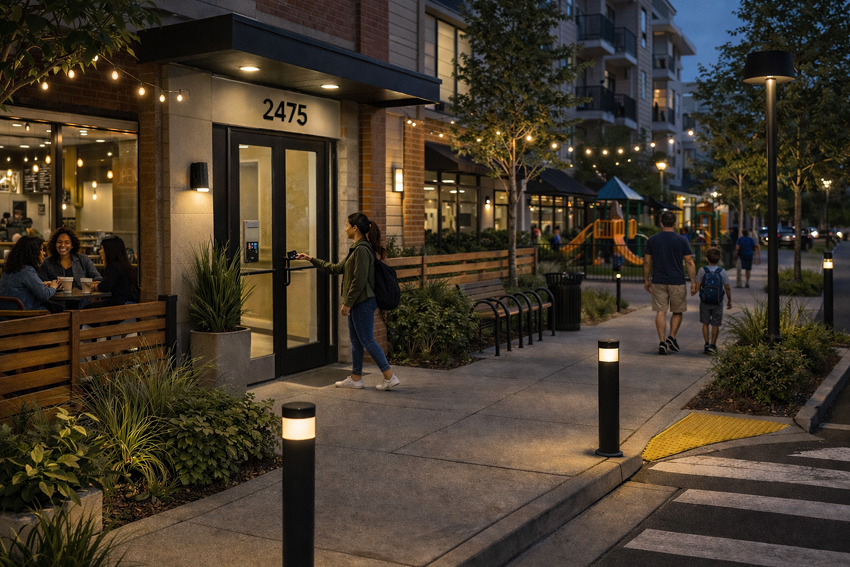
In today’s conversations around safety and security, it’s common to hear strong opinions about what works best. Some advocate for more technology. Others focus on physical security measures. And in many cases, these approaches are treated as separate or even competing strategies.
In reality, the most effective environments are not built on a single solution. They are layered.
Crime Prevention Through Environmental Design, physical security, and technology are not independent systems. When applied correctly, they work in partnership, each strengthening the other. At the center of that partnership is CPTED.
CPTED provides the foundation that allows physical security measures and technology to function at their highest level.
It shapes the environment in a way that supports visibility, guides movement, reinforces ownership, and encourages appropriate use of space. When those conditions are in place, everything else works better.
This is why CPTED is often described as a force multiplier.
CPTED as a Force Multiplier
CPTED does not replace physical security or technology. It enhances them.
It reduces the need for constant intervention by influencing behavior before issues arise. It creates environments that are easier to understand, easier to navigate, and easier to monitor. And it ensures that when security measures and technology are used, they are working within a system that supports their purpose.
Instead of reacting to problems, CPTED helps prevent them.
The Four Principles Working in Partnership
The strength of CPTED lies in its core principles. Each one directly supports and improves the effectiveness of physical security and technology.
Natural Surveillance
Natural surveillance is about creating clear lines of sight so people can see and be seen. When individuals can easily observe their surroundings, they are more aware and more comfortable. At the same time, those conditions discourage unwanted behavior.
Those same lines of sight also improve the performance of security measures and technology.
Cameras are more effective when they are not obstructed by poor layout or overgrown landscaping. Lighting performs better when it is supporting visibility rather than trying to compensate for design limitations. Security personnel are more effective when they can clearly observe activity without barriers.
The same design that helps a person feel safe also helps a camera see clearly.
A common example of this disconnect can be seen in the placement of access control features such as intercoms, keypads, or biometric readers. In an effort to create privacy for users, these elements are sometimes placed in recessed areas, corners, or alcoves.
While the intention may be to provide a more comfortable or discreet experience, the result is often the opposite. These locations can create concealment, reduce visibility, and introduce lighting challenges.
From a CPTED perspective, this undermines natural surveillance.
From a security and technology perspective, it also creates problems. Cameras may have limited or obstructed views. Lighting may be insufficient for both visibility and image quality. Users may feel less safe approaching or using the system.
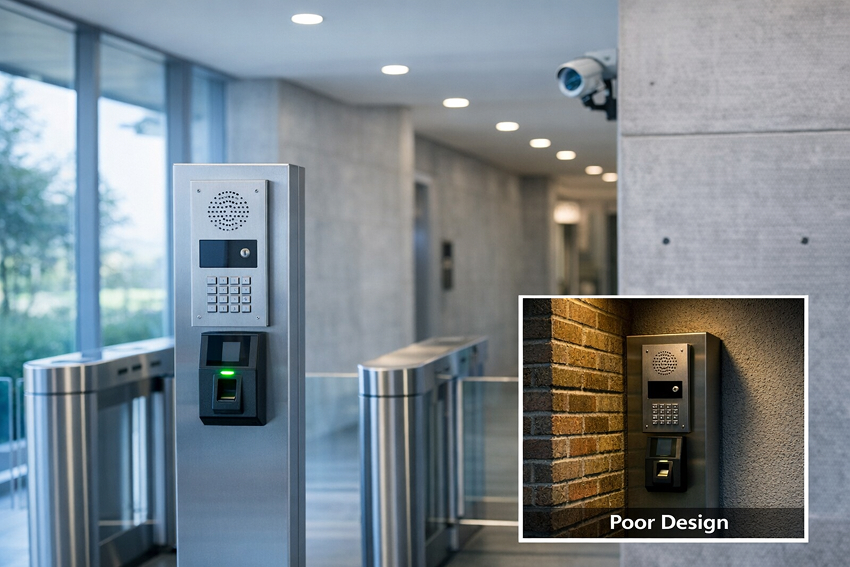
Access control placed within clear lines of sight supports both user safety and system performance.
When access points are placed in visible, well-lit areas that align with natural lines of sight, they are safer, easier to monitor, and more effective for both people and technology.
Natural Access Control
Natural access control focuses on guiding movement through a space. It helps people understand where they are supposed to go and discourages movement into areas where they do not belong.
When movement is intentional, physical security measures become more efficient.
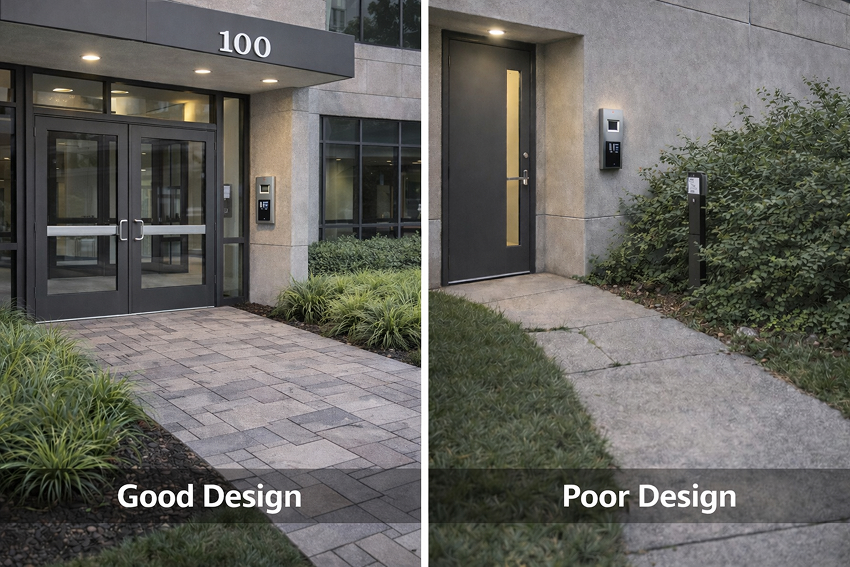
Access points are most effective when aligned with natural lines of sight.
Access control systems can be placed at key entry points rather than scattered throughout a site. Gates, doors, and barriers are more effective when they align with the natural flow of movement. Technology such as license plate readers and access systems performs better when it is positioned at predictable, well-defined locations.
Instead of chasing movement, security measures are aligned with it.
Territorial Reinforcement
Territorial reinforcement creates a sense of ownership. It clearly defines public, semi-public, and private space, helping people understand where they belong.
When spaces are defined, behavior becomes more predictable.
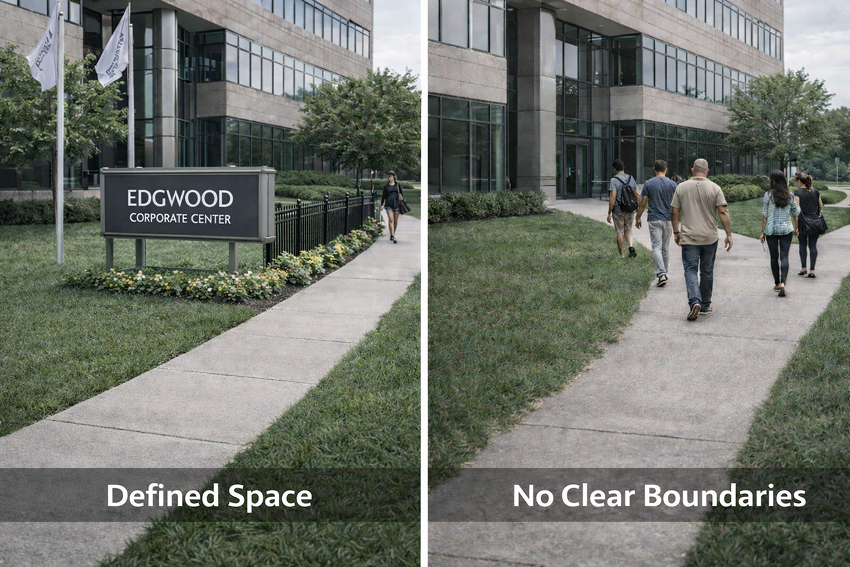
Defined space makes behavior easier to understand and manage.
This supports both security and technology by making it easier to recognize when something is out of place. Cameras capture activity that is more clearly understood within its context. Security personnel can more easily distinguish between normal and abnormal behavior. Physical security measures reinforce boundaries that are already established through design.
When people feel a sense of ownership, they are more likely to respect and protect the space.
Maintenance
Maintenance reflects care and attention. A well-maintained environment communicates that a space is actively managed and monitored.
This has a direct impact on both behavior and system performance.
Lighting, cameras, and access control systems all rely on proper maintenance to function correctly. At the same time, a neglected environment can invite misuse and undermine even the most advanced security measures.
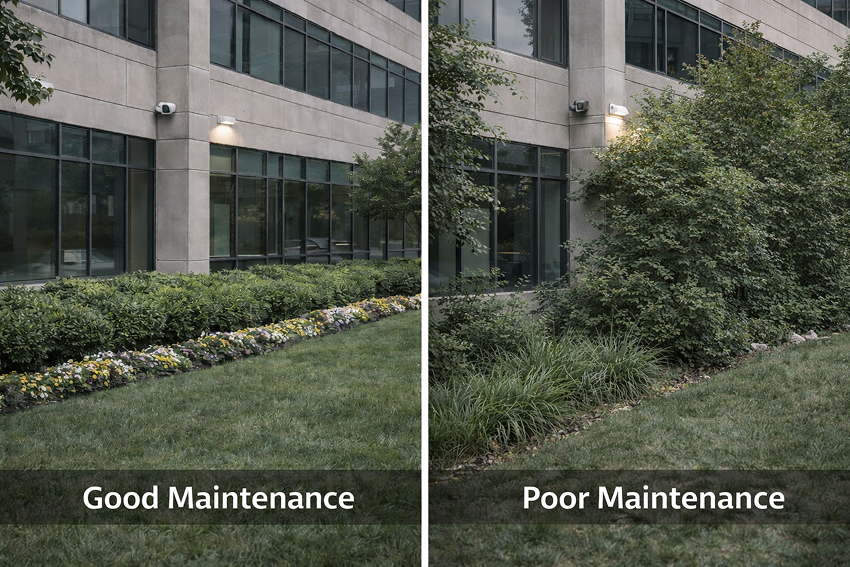
Well-maintained environments support both perception and system performance.
Maintenance supports both perception and performance. It reinforces the idea that the space is controlled, which strengthens the effectiveness of every other layer.
Supporting Elements That Strengthen the System
Beyond the core principles, supporting CPTED elements play a critical role in how well security measures and technology perform.
Lighting is one of the most important. It supports visibility for people while also improving camera clarity and coverage.
Wayfinding reduces confusion and helps people move through spaces as intended, which supports access control and reduces unnecessary congestion.
Activity generators increase legitimate use of space, strengthening natural surveillance and reducing opportunities for unwanted behavior.
Landscaping, when done correctly, enhances visibility and comfort. When done poorly, it creates hiding places and obstructs both people and cameras.
These details often determine whether a security system succeeds or struggles.
The Human Element
One of the most overlooked aspects of safety is the role of people.
Technology can observe. Security measures can respond. But people are often the first line of prevention.
When environments are designed to encourage positive use, connection, and a sense of ownership, people naturally become part of the safety system. They notice what is happening around them. They recognize when something feels out of place. They contribute to the overall sense of order and care.
This human element cannot be replaced, but it can be supported through thoughtful design.
Where Things Go Wrong
Challenges often arise when one layer is relied on too heavily.
Technology is added without considering how the space functions. Cameras are installed in areas with poor visibility. Access control systems are placed without understanding natural movement patterns. Security measures are added after problems occur instead of being integrated from the beginning.
When CPTED is treated as optional rather than foundational, the result is often a collection of disconnected solutions.
A Layered Approach to Safer Places
The most effective environments are created through intentional layering.
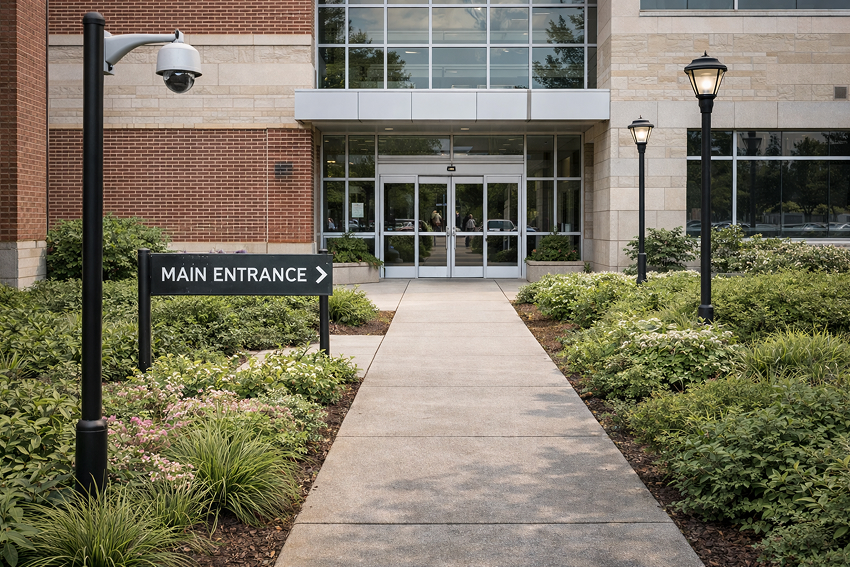
Aligned design, security, and technology create safer, more manageable spaces.
CPTED provides the structure. Physical security reinforces it. Technology supports and scales it.
When these elements are aligned, they do not compete. They work together to create spaces that are easier to understand, easier to manage, and ultimately safer for the people who use them.
CPTED does not replace physical security or technology. It strengthens them. It aligns them. It gives them purpose.
And when applied correctly, it becomes the force multiplier that turns individual measures into a cohesive system for creating safer places.

Joelle Hushen – President and CEO
Joelle Hushen is the Founder and President of the National Institute of Crime Prevention (NICP), Inc., an internationally recognized leader in Crime Prevention Through Environmental Design (CPTED) training and certification. Under her leadership, NICP has trained thousands of practitioners across law enforcement, planning, design, security, corporate, healthcare, and community development sectors, advancing CPTED as a practical, principle-based approach to creating safer environments. She has guided the development of NICP’s curriculum, assessment standards, and the CPTED Professional Designation (CPD), one of the most widely recognized CPTED credentials in the United States and internationally.
Joelle is also the Co-Founder and Director of the U.S. CPTED Association (USCA), where she supports national collaboration, professional development, and industry advancement. Her work focuses on the relationship between environment, behavior, and human experience, including the development of frameworks such as Embodied CPTED™ and Design for Decommission™. She is committed to expanding CPTED education and supporting professionals working to create safer, stronger communities.
Ready to Earn Your CPTED Certification?
Take the next step toward becoming a CPTED professional. Our in-person and online training options will prepare you to assess environments, apply proven CPTED strategies, and earn your CPD designation. Learn how to design safer, more livable spaces that strengthen communities and reduce crime before it happens.