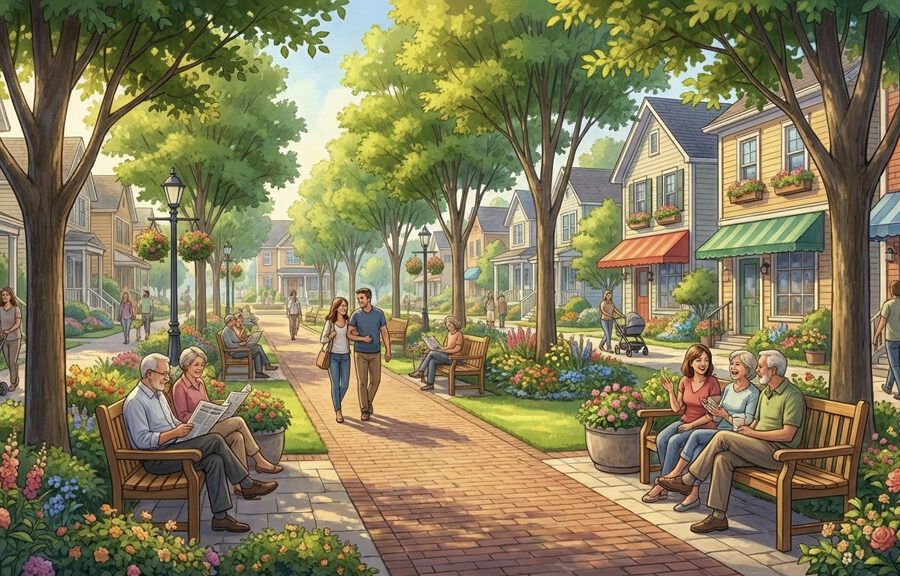

How do the concepts described as 2nd and 3rd Generation CPTED compare to the original CPTED principles? This article examines the generational debate and explains why professional consistency and the core CPTED principles continue to guide effective Crime Prevention Through Environmental Design.

Safety is becoming part of how communities design and care for their spaces. The CPTED Movement brings structure to that shift through education, design, and shared responsibility.
Learn how using CPTED in problem solving can reduce crime in buildings, single family homes, and neighborhoods. Discover how environmental design strategies address the root causes of crime and create safer spaces.
The CPTED guidelines are a living framework shaped by practice, people, and place. See how the CPTED Movement and USCA 2026 highlight shared stewardship and applied crime prevention.
How CPTED after dark supports safety, workforce stability, and economic vitality by designing cities for legitimate activity, visibility, and human presence at night.
Learn why pride in place is a protective factor and how CPTED helps communities build ownership, stewardship, and shared responsibility for safer environments.
Explore how CPTED is reshaping the way communities experience safety by shifting fear into ownership through design, behavior, and shared responsibility.
Winter markets support CPTED by activating public space during colder months. Learn how seasonal programming strengthens natural surveillance, community connection, and safety year-round.