

The CPTED Model
By Joelle Hushen – President and CEO
Over the past five decades, Crime Prevention Through Environmental Design (CPTED) has evolved from a promising crime prevention philosophy into a widely recognized discipline practiced by planners, architects, landscape architects, law enforcement, security professionals, educators, public health practitioners, and many others. As its application has expanded across professions and sectors, so too has the vocabulary used to describe its concepts, processes, and practices.
Today, practitioners routinely use terms such as principles, strategies, elements, techniques, layers, approaches, methodologies, models, and frameworks. While these terms often describe related concepts, they are not always used consistently. In many cases, the same term is used to mean different things, while different terms are used to describe the same concept. As CPTED has matured, this lack of a common language has made it increasingly difficult to communicate ideas clearly across disciplines, compare practices, develop guidance, and advance the profession as a whole.
This challenge is not unique to CPTED. As professions mature, they naturally develop a common language that enables practitioners, educators, researchers, policymakers, and standards organizations to communicate with greater precision and consistency. Shared terminology does more than define words; it establishes a common understanding of how ideas relate to one another and provides the foundation for education, collaboration, professional practice, research, and future innovation.
This paper presents the CPTED Model, a systems-based organizing model that clarifies how the major concepts of CPTED relate to one another. Rather than introducing new theories or replacing existing principles, it organizes the profession’s existing body of knowledge into a coherent structure that supports clearer communication, interdisciplinary collaboration, education, research, and professional practice.
The concepts presented in this paper build upon the foundational theories, principles, and contributions that have shaped CPTED. Their purpose is not to redefine the profession, but to provide a common conceptual foundation that helps organize its growing body of knowledge. By establishing a shared language for understanding how CPTED’s major concepts relate to one another, the profession can communicate more effectively, strengthen interdisciplinary collaboration, support the development of national guidelines and professional standards, and continue advancing CPTED as an integrated approach to creating safer, healthier, and more resilient communities.

The Evolution of CPTED
Over the past five decades, CPTED has evolved from a promising crime prevention philosophy into a multidisciplinary profession that draws upon knowledge from architecture, planning, landscape architecture, criminology, law enforcement, sociology, psychology, public health, transportation, sustainability, resilience, and many other fields. As the profession has matured, it has increasingly recognized that creating safer places involves more than the design and management of the built environment. It also depends upon fostering strong social environments through community engagement, partnerships, stewardship, programming, education, and community building. Safe places are not created by physical design or social initiatives alone; they emerge through the integration of people, place, and the interactions between them.
This evolution reflects the growing recognition that crime prevention is a shared responsibility requiring collaboration across disciplines and sectors. Professionals from across the design, public safety, public health, government, and community sectors all influence the safety, functionality, and long-term success of the environments they help create and sustain. As new disciplines and perspectives have contributed to CPTED, they have strengthened the profession by broadening both its knowledge base and its practical application.
As this collaborative body of knowledge has grown, so too has the language. Researchers have introduced new concepts, practitioners have refined implementation strategies, educators have developed new ways of teaching CPTED, and organizations have produced guidance tailored to different audiences and environments. This diversity has enriched the profession, encouraging innovation and expanding the ways CPTED can be applied across a wide range of settings and challenges.
At the same time, the absence of a common conceptual foundation has resulted in increasing variation in the terminology used throughout the profession. Similar concepts are often described using different terms, while identical terms may carry different meanings depending on the discipline, organization, publication, or training program. This variation is a natural consequence of a profession that has grown organically across many fields, but it can also create unnecessary confusion for practitioners, educators, policymakers, researchers, and organizations working toward the same goals.
The challenge, therefore, is not that CPTED lacks ideas, innovation, or interdisciplinary collaboration. Rather, the profession has reached a stage in its evolution where its growing body of knowledge would benefit from a more consistent way of organizing its concepts, systems, and practices. Establishing a common language is not about redefining CPTED; it is about providing a shared conceptual foundation that enables professionals from diverse disciplines to communicate more clearly, collaborate more effectively, and continue advancing the profession together.
Why a Common Language Matters
Language shapes how professions think, communicate, teach, collaborate, and evolve. As CPTED has expanded across disciplines, organizations, and areas of practice, its terminology has likewise grown. This diversity reflects the profession’s strength, but it has also introduced inconsistencies that can create confusion when practitioners, educators, policymakers, researchers, and organizations work together.
Consider the variety of terms commonly used throughout the profession. CPTED has been described as a philosophy, a strategy, a methodology, a discipline, a model, a framework, and an approach. Individual concepts have similarly been described as principles, strategies, elements, techniques, practices, layers, and components. While each of these terms may be appropriate within a particular context, they are not always used consistently, making it difficult to distinguish between broad concepts and the individual practices that support them.
The challenge is not simply one of terminology; it is one of conceptual organization. Without a shared understanding of how these concepts relate to one another, it becomes more difficult to educate new practitioners, compare guidance across organizations, develop professional standards, conduct research, and communicate the value of CPTED to decision-makers and the public.
Developing a common language is not intended to standardize thought or discourage innovation. On the contrary, it provides a stable conceptual foundation that allows innovation to occur within a shared understanding. Just as designers and public health professionals rely on common terminology while continuing to advance their respective disciplines, CPTED can benefit from a common language that promotes both consistency and continued evolution.
To develop the language, it is first necessary to distinguish between the broad concepts that define CPTED and the individual practices used to implement it. The sections that follow present the CPTED Model as one approach to organizing those concepts into a coherent systems-based organizing model.
Introducing the CPTED Model
The preceding sections have demonstrated that as CPTED has matured into an increasingly interdisciplinary profession, its body of knowledge has continued to expand. While this growth has strengthened the profession, it has also highlighted the need for a more consistent way of organizing its concepts, systems, and practices.
The CPTED Model is offered as one approach to meeting that need.
Rather than introducing new theories or replacing the foundational principles of CPTED, the CPTED Model organizes the profession’s existing body of knowledge into a coherent conceptual structure. It provides a common language for understanding how CPTED’s major concepts relate to one another and how, together, they contribute to the creation of safer, healthier, and more resilient communities.
At its highest level, the CPTED Model recognizes that creating and sustaining safe places requires attention to two interconnected systems.
The first is the Built Environment System, the lifecycle through which places are envisioned, planned, designed, procured, constructed, operated, maintained, evaluated, and ultimately renewed. Every place, regardless of its size or purpose, exists within this continuous lifecycle.
The second is the Social Environment System, the ongoing processes through which people influence, experience, activate, care for, and strengthen those places through community engagement, partnerships, education, programming, stewardship, and other forms of collective action.
These systems do not operate independently. They continuously influence one another. Decisions made within the built environment shape opportunities for social interaction, while the social environment influences how places are used, perceived, maintained, and sustained over time. Together, they represent the complementary dimensions through which CPTED is realized in practice.
The CPTED Model also recognizes that creating safer communities requires more than understanding these systems. Organizations must be able to embed CPTED into how they make decisions and how they carry out those decisions over time.
Institutionalizing CPTED refers to embedding CPTED into the policies, governance, organizational culture, planning processes, and decision-making structures that guide communities and organizations.
Operationalizing CPTED refers to translating those commitments into everyday practice through projects, programs, partnerships, assessments, management practices, education, and continuous action.
Surrounding all of these components is Continuous Improvement. CPTED is not a one-time intervention but an ongoing process of learning, evaluation, adaptation, and refinement. As communities evolve, technologies advance, and new challenges emerge, organizations must continually learn and adapt to strengthen both the built and social environments.
Together, these five components form the CPTED Model—an organizing model that presents CPTED as an integrated, interdisciplinary profession rather than a collection of independent practices. The sections that follow examine each component in greater detail and explore how, together, they contribute to safer, healthier, and more resilient communities.
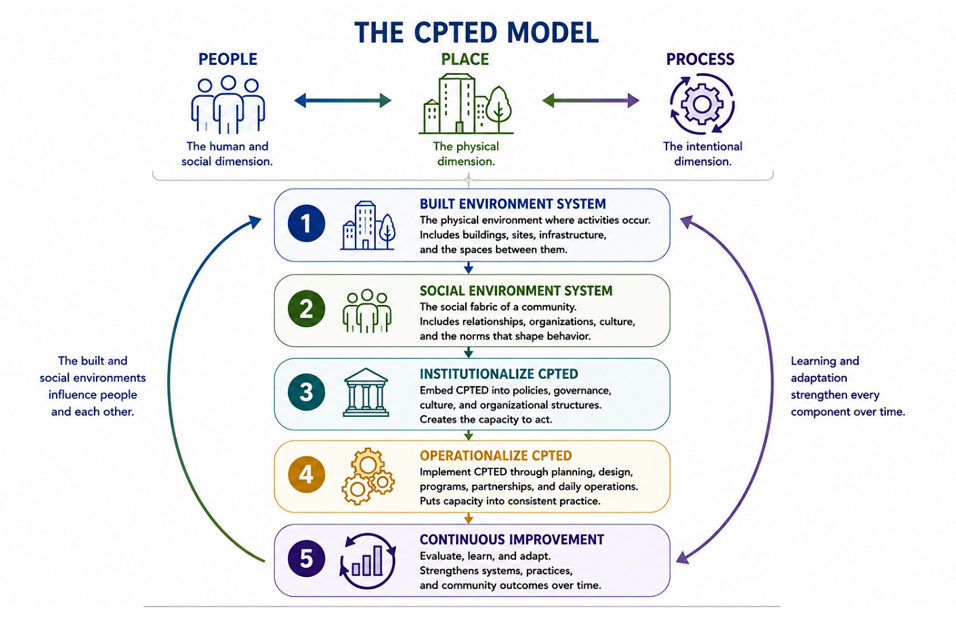
Figure 1. The CPTED Model. The model integrates people, place, and process through five interconnected components—the Built Environment System, Social Environment System, Institutionalizing CPTED, Operationalizing CPTED, and Continuous Improvement, that together support safer, healthier, and more resilient communities.
Physical and Social Environments: Two Interdependent Systems
CPTED has traditionally been associated with the physical characteristics of places, how buildings are designed, how streets are connected, how parks are maintained, how lighting is provided, and how access is managed. These physical characteristics remain essential because they influence opportunities for crime, perceptions of safety, and the ways people experience and move through an environment.
Equally important, however, are the social environments that shape how places function over time. Community engagement, organizational partnerships, neighborhood stewardship, education, programming, social cohesion, and collective efficacy all influence whether a place remains vibrant, welcoming, and resilient. Even the most thoughtfully designed environment cannot achieve its full potential without the people and organizations who activate, care for, and sustain it.
The relationship between these two environments is reciprocal. Decisions about the built environment influence social interaction, while social dynamics influence how physical spaces are used, maintained, adapted, and perceived. Neither operates independently; each continuously shapes and reinforces the other.
Recognizing this relationship does not redefine CPTED. Rather, it reflects the profession’s continued evolution toward a more integrated understanding of how safer communities are created and sustained. The CPTED Model distinguishes between the Built Environment System and the Social Environment System not because they represent separate approaches to CPTED, but because together they provide a more complete understanding of how safer communities are created and sustained.

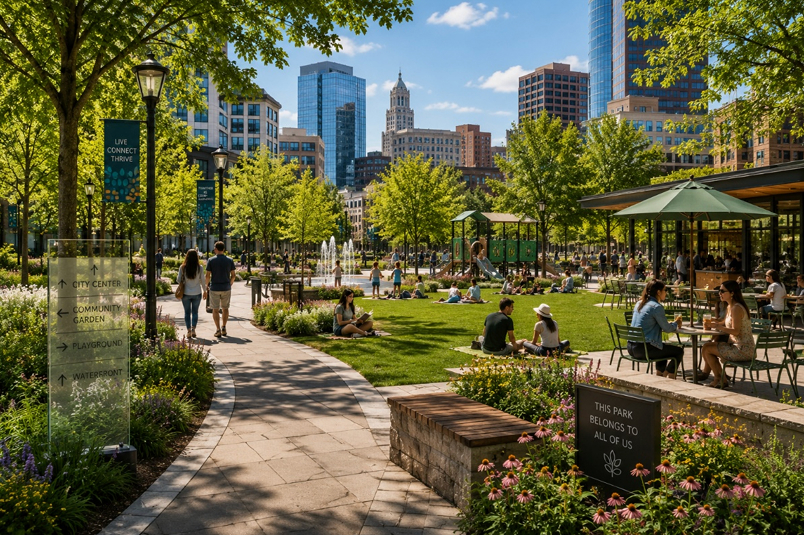
Figure 2. People shape places, and places shape people. The Built Environment System and the Social Environment System continually influence one another through the reciprocal relationship between people and place.
The sections that follow examine each of these systems in greater detail before exploring how organizations institutionalize and operationalize CPTED within both.
The Built Environment System
Every place has a story.
Whether it is a neighborhood, school, healthcare campus, downtown district, transportation hub, park, commercial development, or corporate campus, no place simply appears fully formed. Every place is envisioned, planned, designed, constructed, occupied, managed, evaluated, adapted, and eventually renewed. Throughout its existence, it continues to change in response to the people who use it, the organizations that manage it, the communities it serves, and the social, economic, and environmental conditions that surround it.
The CPTED Model refers to this progression as the Built Environment System, the continuous lifecycle through which places are envisioned, created, managed, evaluated, and renewed. Rather than viewing CPTED as an activity limited to the design or construction of a project, the Built Environment System recognizes that opportunities to influence safety, functionality, and quality of life exist throughout the entire lifecycle of a place.
Every decision made within this system influences the decisions that follow. A community’s vision shapes its planning efforts. Planning influences design. Design informs procurement and construction. Construction establishes the conditions for operations and maintenance. Evaluation identifies opportunities for improvement, leading to renewal and the beginning of the next cycle. Each stage builds upon the one before it, creating a continuous process rather than a series of isolated events.

Figure 3. The Built Environment System encompasses the complete lifecycle of a place—from vision and planning through design, construction, operation, maintenance, evaluation, adaptation, and renewal. Every decision throughout this lifecycle influences the long-term safety, health, resilience, and quality of the environment.
Viewing the built environment as a system changes how CPTED is applied. Rather than asking, “How do we incorporate CPTED into a design?” the more appropriate question becomes, “How can CPTED inform decisions throughout the entire lifecycle of this place?” This broader perspective encourages earlier collaboration, more informed decision-making, and greater opportunities to create environments that remain safe, functional, resilient, and adaptable over time.
Importantly, the Built Environment System does not exist independently of the people it serves. Every stage of the lifecycle is influenced by community needs, stakeholder participation, organizational priorities, operational practices, and ongoing feedback from those who experience the environment each day. The built environment provides the physical setting, but its long-term success depends upon the continuous interaction between people and place.
For this reason, the Built Environment System should not be viewed as a linear sequence of projects that ends when construction is complete. Instead, it is a continuous cycle of planning, action, evaluation, learning, and renewal that provides the physical foundation for creating safer, healthier, and more resilient communities.
The Social Environment System
While the Built Environment System provides the physical foundation for a place, it is the Social Environment System that gives that place life, purpose, and identity. Streets, parks, schools, neighborhoods, business districts, and public spaces do not become successful simply because they are well designed. They become successful because people choose to use them, care for them, invest in them, and develop a sense of ownership and belonging.
The Social Environment System recognizes that safety is influenced not only by the physical characteristics of a place, but also by the relationships, behaviors, organizations, and shared responsibilities that shape how that place functions over time. Community engagement, education, partnerships, programming, stewardship, organizational leadership, and resident participation all contribute to creating environments that are active, resilient, and capable of adapting to changing community needs.
Unlike the Built Environment System, which generally follows the lifecycle of a physical place, the Social Environment System is continuous and dynamic. Communities are constantly changing as new residents arrive, businesses open and close, organizations evolve, demographics shift, and community priorities change. These social dynamics influence how places are experienced, maintained, perceived, and ultimately whether they remain safe and welcoming.
The Social Environment System also recognizes that every individual and organization has a role to play in creating safer communities. Local governments establish policy and provide public services. Law enforcement builds relationships and supports problem solving. Schools educate and engage young people. Businesses activate commercial districts and invest in their communities. Neighborhood organizations foster social connections and collective action. Residents contribute through everyday stewardship, participation, and caring for the places they call home. Together, these contributions create a shared system of responsibility that no single organization can achieve alone.
Importantly, the Social Environment System is not separate from the Built Environment System; it continually interacts with it. Well-designed environments encourage positive social interaction, while strong social networks help activate, maintain, and improve physical spaces. Community feedback influences planning decisions. Programming activates parks and public spaces. Stewardship improves maintenance. Partnerships expand resources. Education encourages appropriate use. In turn, improvements to the built environment create new opportunities for social interaction, economic activity, recreation, and community life. Each system strengthens the other through an ongoing cycle of mutual influence.

Figure 4. The Social Environment System in practice. Community engagement, partnerships, and stewardship strengthen places by activating, caring for, and continually improving the environments people share
Recognizing the Social Environment System reinforces an important principle of CPTED: creating safer communities is not solely the responsibility of designers, planners, or law enforcement. It is a shared endeavor requiring collaboration among public agencies, private organizations, community groups, and residents. The physical environment creates opportunities, but the social environment determines how those opportunities are realized and sustained.
For this reason, the Social Environment System should be viewed as an essential component of the CPTED Model. Together, the Built Environment System and the Social Environment System provide a more complete understanding of how safer, healthier, more resilient, and thriving communities are created—not through physical design alone or social initiatives alone, but through the continuous interaction between people and place.
Institutionalizing CPTED
Understanding the Built Environment System and the Social Environment System provides a more complete picture of how safer communities are created. The next challenge is ensuring that these concepts are applied consistently rather than depending on the interest, knowledge, or initiative of individual practitioners.
This is the purpose of Institutionalizing CPTED.
Institutionalizing CPTED is the process of embedding CPTED into the policies, governance, organizational culture, planning processes, and decision-making structures that guide how communities and organizations operate. Rather than viewing CPTED as a standalone program or a series of individual projects, institutionalization establishes it as an integral part of organizational decision-making, influencing actions at every level and throughout both the Built Environment System and the Social Environment System.
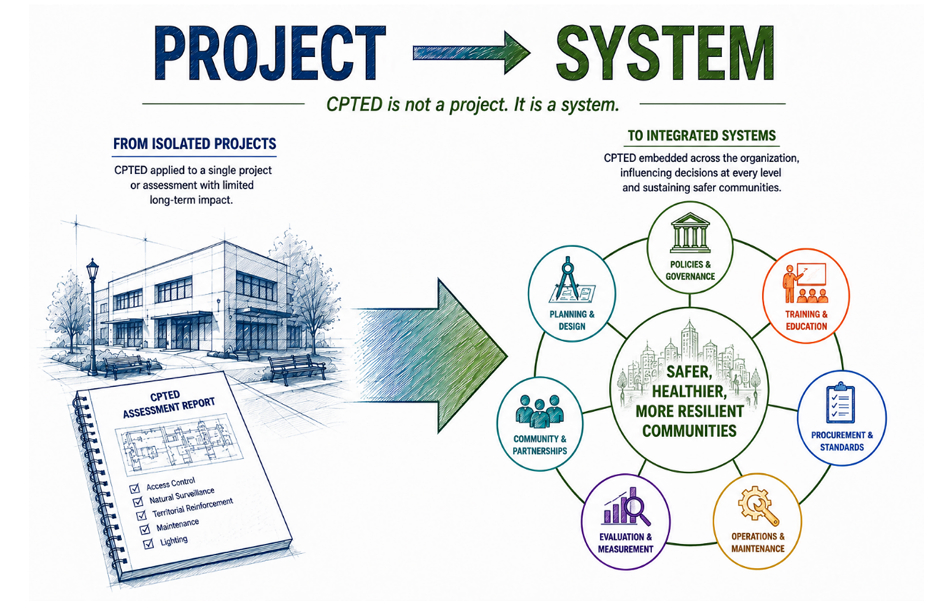
Figure 5. Institutionalizing CPTED. Organizations move beyond individual projects by embedding CPTED into policies, governance, planning, standards, and organizational systems that guide consistent decision-making.
Organizations that institutionalize CPTED move beyond relying on individual champions or isolated successes. Instead, they establish systems that make CPTED part of normal business operations. This may include adopting organizational policies, integrating CPTED into comprehensive plans and development regulations, incorporating CPTED requirements into procurement and project management processes, establishing interdisciplinary review procedures, providing ongoing education and training, defining organizational roles and responsibilities, and measuring outcomes through continuous evaluation and improvement.
Institutionalization also recognizes that creating safer communities is a shared organizational responsibility. The departments, agencies, organizations, and community partners involved in shaping the built and social environments each contribute distinct expertise and responsibilities. Embedding CPTED into organizational structures creates a shared foundation through which these disciplines can collaborate toward common community outcomes.
Importantly, institutionalizing CPTED does not prescribe a single organizational model. Every community differs in its governance structure, available resources, regulatory environment, and local priorities. The objective is not organizational uniformity but organizational commitment. Each organization should determine the most appropriate methods for integrating CPTED into its own mission, operations, and decision-making processes while remaining consistent with the broader principles and objectives of the profession.
When CPTED becomes institutionalized, it is no longer dependent upon individual enthusiasm or isolated initiatives. It becomes part of how an organization thinks, plans, collaborates, and makes decisions. This continuity extends beyond individual leaders, supports long-term resilience, and provides the foundation for consistent implementation across projects, programs, and partnerships.
Institutionalizing CPTED establishes the organizational foundation, but policies and governance alone do not create safer communities. Those commitments must be translated into everyday practice. That is the purpose of Operationalizing CPTED.
Institutionalizing CPTED moves CPTED from individual projects to organizational systems.
Operationalizing CPTED
Institutionalizing CPTED establishes an organization’s commitment to Crime Prevention Through Environmental Design by embedding it into governance, policy, and decision-making.
Operationalizing CPTED translates that commitment into consistent, day-to-day action. Where institutionalization answers the question, “How does an organization decide?” operationalization answers, “How does an organization deliver?”
Operationalizing CPTED is the practical application of organizational commitments through projects, programs, services, partnerships, and everyday activities. It is where policies become practices, plans become projects, and organizational intent becomes measurable outcomes. It is the point at which CPTED moves from strategy to implementation.
Effective operationalization extends across both the Built Environment System and the Social Environment System. Within the Built Environment System, it includes applying CPTED throughout planning, design, procurement, construction, operations, maintenance, evaluation, and renewal. Within the Social Environment System, it includes community engagement, education, partnerships, stewardship, activation of public spaces, organizational collaboration, and the ongoing cultivation of relationships that strengthen communities over time.
Operationalization also requires coordination across disciplines. Designers, planners, engineers, architects, law enforcement professionals, parks and recreation staff, transportation agencies, educators, healthcare providers, community organizations, business leaders, and residents all contribute to the successful implementation of CPTED within their respective roles. While their responsibilities differ, they work toward a common objective using a shared conceptual foundation and common language.
Importantly, operationalizing CPTED is not simply completing projects or conducting CPTED assessments. It is establishing repeatable processes that consistently integrate CPTED into routine organizational activities. Staff training, interdisciplinary collaboration, project reviews, public engagement, maintenance practices, performance measurement, and continuous feedback all become part of how the organization delivers safer, healthier, and more resilient communities.
Successful operationalization also recognizes that implementation is never static. Communities evolve, technologies advance, organizational priorities change, and new challenges emerge. Operational practices must therefore remain adaptable, allowing organizations to respond to changing conditions while maintaining their long-term commitment to CPTED principles and objectives.
Together, institutionalizing and operationalizing CPTED transform organizational commitment into organizational capability. One establishes how decisions are made; the other ensures those decisions are carried out consistently in practice. Together, they enable organizations to create, manage, and sustain safer communities throughout the Built Environment System and the Social Environment System.
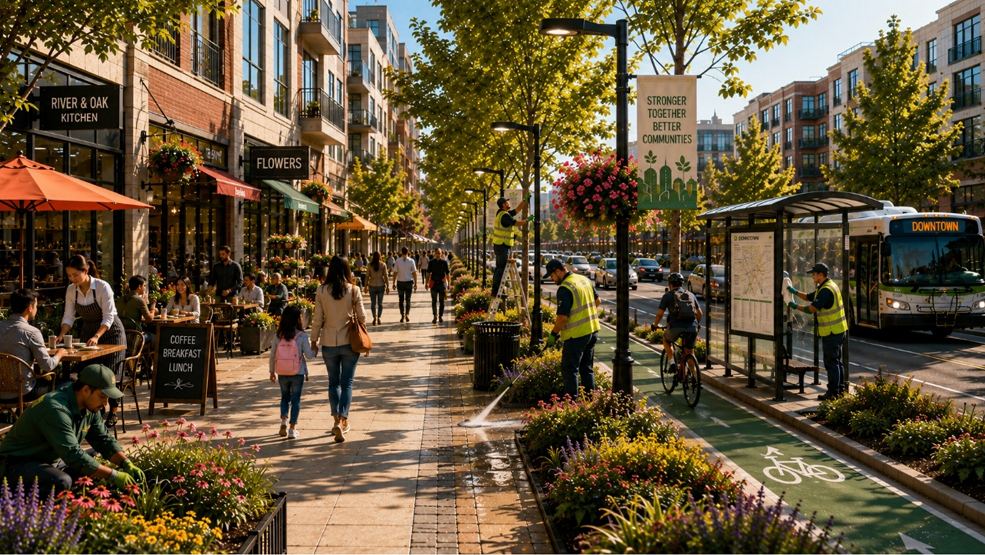
Figure 6. Operationalizing CPTED. Translating organizational commitment into implementation across projects, programs, partnerships, and daily operations.
Institutionalizing CPTED establishes the capacity to act. Operationalizing CPTED puts that capacity into practice.
Together, they transform the CPTED Model from a conceptual organizing model into an operational reality that continually shapes safer communities.
The final component of the CPTED Model recognizes that no organization, project, or community remains static. Long-term success depends upon the ability to learn, adapt, and improve continuously. This ongoing process is the focus of Continuous Improvement.
Continuous Improvement
No community remains static. Neighborhoods evolve, populations change, technologies advance, organizational priorities shift, and new challenges emerge over time. As a result, CPTED cannot be viewed as a one-time intervention or a completed project. It is an ongoing process of observation, learning, adaptation, and improvement.
Continuous Improvement is the process through which organizations evaluate outcomes, learn from experience, and refine both policies and practices over time. It provides the feedback necessary to strengthen the Built Environment System, the Social Environment System, Institutionalizing CPTED, and Operationalizing CPTED. Rather than representing a final step, Continuous Improvement connects every component of the CPTED Model through an ongoing cycle of organizational learning.
Effective continuous improvement relies on gathering meaningful information from multiple sources. Crime trends, calls for service, maintenance records, community perceptions, environmental audits, performance measures, stakeholder feedback, operational experience, and emerging research all provide valuable insight into how places and organizations are performing. Together, these observations help organizations identify successes, recognize emerging challenges, and make informed decisions about future improvements.
Continuous Improvement also reinforces the importance of collaboration. Lessons drawn from diverse professional, organizational, and community perspectives contribute to a broader understanding of how communities function and how CPTED practices can evolve in response to changing conditions. As knowledge grows, organizations refine policies, improve operational practices, strengthen partnerships, and adapt their approaches to better serve their communities.
Importantly, Continuous Improvement recognizes that there is no final state of CPTED excellence. Every project, policy, program, and partnership provides new opportunities to learn. Success is measured not by achieving perfection, but by creating organizations that continually evaluate their performance, respond to change, and improve their ability to create safer, healthier, and more resilient communities.
Within the CPTED Model, Continuous Improvement serves as the integrating function that connects every component. Insights gained through implementation influence organizational policies. Changes in policy improve operational practice. Operational experience informs future planning and design decisions. Community feedback strengthens social initiatives. In this way, each component continually informs and reinforces the others, allowing the entire model to evolve together.
The CPTED Model therefore represents more than an organizing model for understanding CPTED. It provides a systems-based approach for creating organizations and communities that continually learn, adapt, and improve in pursuit of safer, healthier, and more resilient places.

Figure 7. Continuous Improvement: The feedback loop connecting every component of the CPTED Model through evaluation, learning, adaptation, and organizational growth.
Putting It All Together
For more than fifty years, Crime Prevention Through Environmental Design has continued to evolve as a multidisciplinary profession dedicated to creating safer communities. As the profession has grown, so too has its body of knowledge. While this growth has strengthened CPTED, it has also highlighted the need for a common conceptual foundation that organizes these diverse contributions into a coherent whole.
The CPTED Model provides that conceptual foundation.
Rather than redefining CPTED, the CPTED Model provides an organizing model for understanding how safer communities are created, managed, and sustained over time. It recognizes that safer communities emerge through the continuous interaction between the Built Environment System and the Social Environment System, supported by organizations that institutionalize CPTED, operationalize its practices, and continually improve through learning and adaptation.
Together, these five components create a comprehensive model that reflects the complexity of modern communities while remaining flexible enough to support a wide variety of organizational structures, professional disciplines, and local contexts. The model recognizes that no single profession, project, or intervention can create lasting safety in isolation. Instead, lasting outcomes emerge through coordinated action, shared responsibility, and continuous collaboration among the many individuals and organizations that influence community life.
Perhaps most importantly, the CPTED Model shifts the profession’s focus from isolated projects toward interconnected systems. It encourages practitioners to look beyond individual design features or programmatic interventions and instead consider how decisions made throughout the lifecycle of places, organizations, and communities influence long-term safety, health, resilience, and quality of life. In doing so, the model positions CPTED not simply as a design methodology or crime prevention strategy, but as an organizational and community systems approach capable of guiding decision-making across disciplines and throughout the entire lifecycle of the built and social environments.
As the profession continues to mature, the need for a shared conceptual language will become increasingly important. The CPTED Model is offered as a foundation for that ongoing conversation. It provides a common conceptual foundation that can support future education, professional certification, organizational implementation, research, standards development, and the creation of National CPTED Guidelines, while remaining flexible enough to evolve alongside the profession itself.
Ultimately, the success of CPTED will not be measured solely by the quality of individual projects, but by the ability of organizations and communities to continually learn, collaborate, and improve together. By viewing CPTED as an interconnected system rather than a collection of isolated practices, the profession can move toward a more consistent, integrated, and enduring approach to creating safer, healthier, and more resilient communities.
The CPTED Model is offered not as the final word on CPTED, but as a common foundation upon which the profession can continue to learn, collaborate, innovate, and grow together.

Joelle Hushen – President and CEO
Joelle Hushen is the Founder and President of the National Institute of Crime Prevention (NICP), Inc., an internationally recognized leader in Crime Prevention Through Environmental Design (CPTED) training and certification. Under her leadership, NICP has trained thousands of practitioners across law enforcement, planning, design, security, corporate, healthcare, and community development sectors, advancing CPTED as a practical, principle-based approach to creating safer environments. She has guided the development of NICP’s curriculum, assessment standards, and the CPTED Professional Designation (CPD), one of the most widely recognized CPTED credentials in the United States and internationally.
Joelle is also the Co-Founder and Director of the U.S. CPTED Association (USCA), where she supports national collaboration, professional development, and industry advancement. Her work focuses on the relationship between environment, behavior, and human experience, including the development of frameworks such as Embodied CPTED™ and Design for Decommission™. She is committed to expanding CPTED education and supporting professionals working to create safer, stronger communities.
Ready to Earn Your CPTED Certification?
Take the next step toward becoming a CPTED professional. Our in-person and online training options will prepare you to assess environments, apply proven CPTED strategies, and earn your CPD designation. Learn how to design safer, more livable spaces that strengthen communities and reduce crime before it happens.